AFL Physiotherapy
Melbourne
Our clinicians have worked within professional football environments where every rehabilitation There's a difference between a physio who treats footballers and a team of physiotherapists who have worked inside AFL clubs, making return-to-play decisions in the country's highest level of football.
APA Member Clinic | AHPRA Registered Physiotherapists | ⭐4.9 Google Rating |
📍Olympic Park, Melbourne | Sports Medicine Australia Member
The Services We Provide to Elite Athletes Are Now Available to Everyone.
At Performe Sports Medicine, our physiotherapy team brings experience from across the AFL system. Lachlan Fooks spent 17 years at Collingwood Football Club, including as Head Physiotherapist. Ben Shipperd works as Head Physiotherapist at St Kilda Football Club after more than a decade at Collingwood. Josh Boehm has progressed from roles across Collingwood's VFL and AFLW programs into a full-time physiotherapy position at North Melbourne Football Club. Laura Fazzari worked across both the AFL and AFLW programs at St Kilda and combines elite sports injury management with advanced expertise in concussion assessment and rehabilitation. Tom O'Connor has worked with VAFA players and umpires and recently completed his Sports and Exercise Physiotherapy Masters placement with Hawthorn Football Club.
Collectively, our team has managed elite footballers across AFL, AFLW, VFL and high-performance environments. The same clinical reasoning, rehabilitation standards and return-to-play frameworks used in professional football are available to every footballer who walks through our doors, from local league players to juniors chasing a draft opportunity.
Proud to be associated with






✓ APA Member
✓ AHPRA Registered
We are committed to providing outstanding patient care in a friendly and welcoming environment.
Our clinicians have worked within professional football environments where every rehabilitation decision matters. Across multiple AFL clubs and elite programs, they've managed the exact injuries footballers commonly experience, including hamstring strains, groin and adductor injuries, syndesmosis sprains, shoulder dislocations, knee injuries and concussion, all while balancing performance, recovery and return-to-play timelines.
→ Return-to-play decisions are evidence-based, not guesswork.
— AFL clubs use structured criteria before players return to competition. We apply the same approach using strength benchmarks, running load progression and change-of-direction testing before you're cleared.
→ We understand the demands of football.
— Repeat high-speed running, contested marking, tackling load and position-specific movement all influence rehabilitation. Your program is designed around the actual demands of your game, not a generic injury protocol.
→ We know when to push and when to hold.
— One of the biggest challenges in football rehabilitation is reducing the risk of re-injury while still returning athletes to competition as early and safely as possible. Our rehabilitation is designed to achieve both.
Simply click through to our booking platform to reserve your appointment with one of our sports physiotherapists.
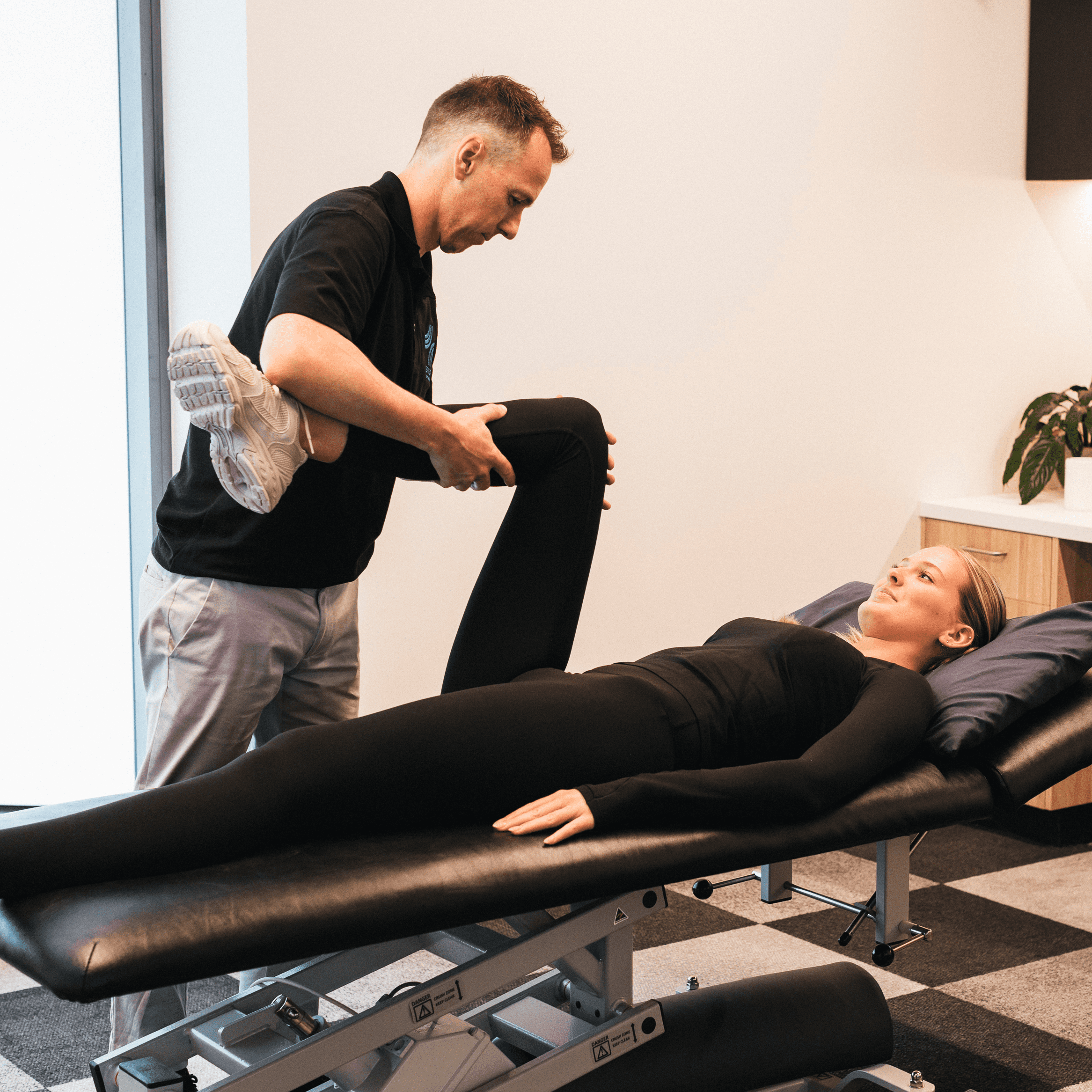
Our Melbourne sports physiotherapists diagnose and treat a wide range of sporting injuries and musculoskeletal conditions. If your injury isn't listed, contact us — we cover the full spectrum of sports-related conditions.
— Hamstring strains: the most common AFL injury. Link: hamstring injury physio page.
— ACL ruptures and knee injuries: link: ACL rehabilitation page.
— Groin and adductor pain (osteitis pubis, adductor tendinopathy)
— Ankle syndesmosis (“high ankle”) sprains
— Shoulder dislocations and AC joint injuries from tackles
— Calf strains, increasingly common in older players
— Quad strains and corks (contusions)
— Back pain in ruckmen and key-position players
— Hamstring strains: the most common AFL injury. Link: hamstring injury physio page.
— ACL ruptures and knee injuries: link: ACL rehabilitation page.
— Groin and adductor pain (osteitis pubis, adductor tendinopathy)
— Ankle syndesmosis (“high ankle”) sprains
— Shoulder dislocations and AC joint injuries from tackles
— Calf strains, increasingly common in older players
— Quad strains and corks (contusions)
— Back pain in ruckmen and key-position players
Our approach to AFL rehab
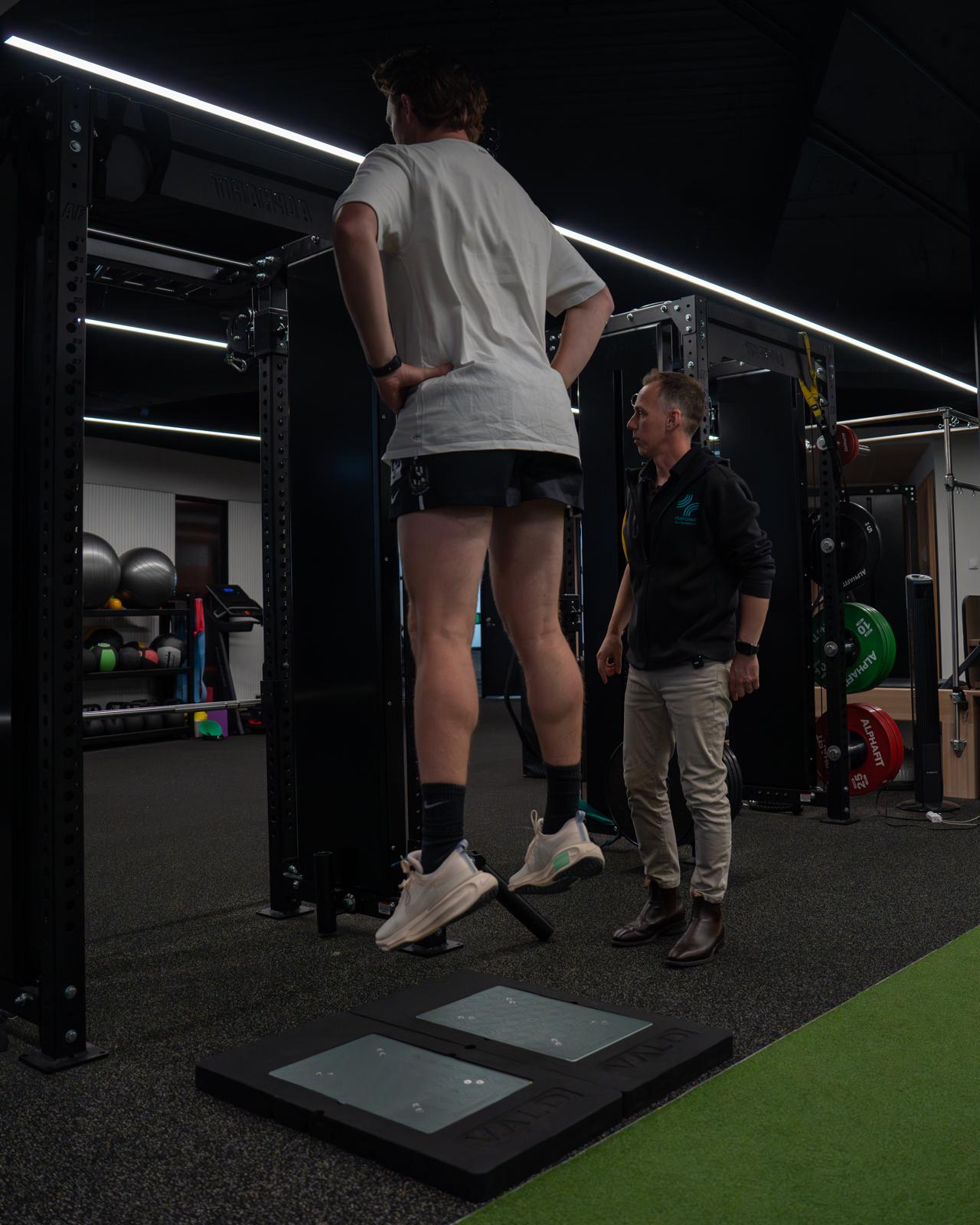
Every footballer starts with a comprehensive assessment, including a detailed injury history, physical examination and objective testing. Where appropriate, we use advanced technology, including the VALD performance testing systems, to accurately measure strength, power and functional performance, helping guide diagnosis, monitor progress and inform safe return-to-play decisions.
From there, we develop a staged rehabilitation program with clear criteria for every progression, following the same evidence-based framework used within professional football environments.
Because Performe is a multidisciplinary sports medicine clinic, your physiotherapist can collaborate directly with our in-house sports and exercise physician for imaging, diagnosis and medical management, while working alongside our experienced strength and conditioning coaches to optimise your rehabilitation and prepare you for the physical demands of returning to football. Rather than being referred between multiple providers, your care is coordinated by one integrated high-performance team.
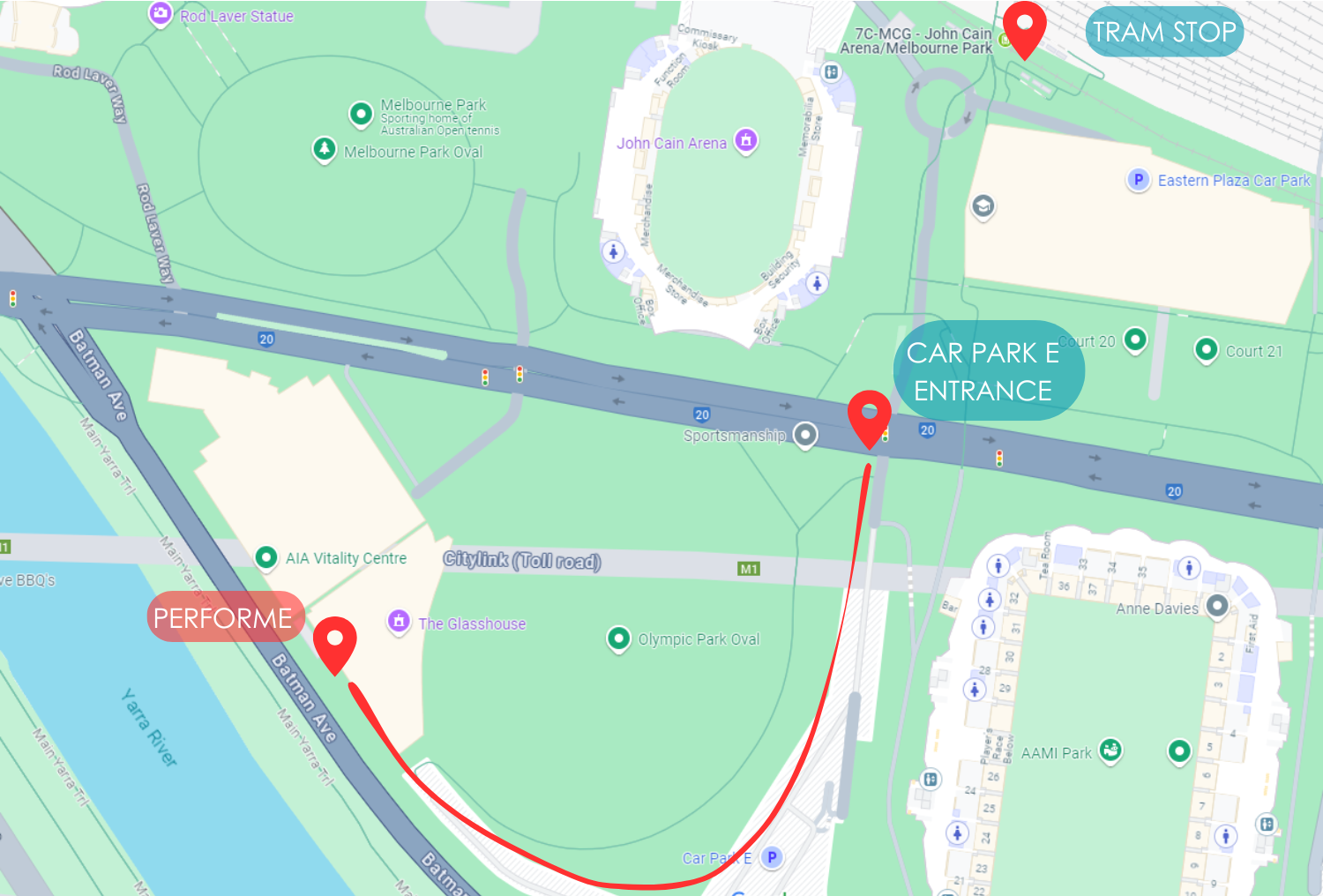
We're located in the Olympic Park precinct, a short trip from Richmond, Collingwood, East Melbourne and the CBD, and easy to reach by train for players across Melbourne.
How long does an AFL hamstring injury take to recover?
Do I need a referral to see an AFL/AFLW physio?
Can you help me return to footy after an ACL reconstruction?
Do you treat local and junior footballers, or just elite players?

HAVE A QUESTION?
Free parking is available via driveway entrance E of AAMI park speak to security at the gate who will allow access for appointments.
CONTACT US
Email: reception@performe.com.au
Phone: 03 8412 0048
Address: 20 Olympic Blvd Melbourne 3004
CLINIC HOURS
Monday to Friday, 8am – 5:30pm